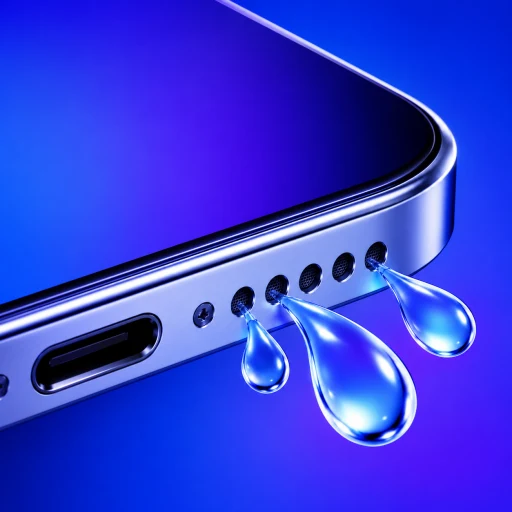
How do droplets create crackling?
Water can interfere with the diaphragm and the path sound takes through the grille. The effect may change as droplets shift. Lower tones often reveal it because they create larger movement.
Improvement during downward positioning or a controlled sequence supports this explanation, but it does not prove the rest of the device is dry.
How does residue differ?
Salt, chlorine, sugar, milk solids, soap and dirt remain after water moves or evaporates. Residue can continue to restrict an opening or alter movement. Repeating a tone cannot remove dissolved solids.
Ask what liquid was involved. A pool, ocean or drink requires a different service threshold from a small fresh-water splash.
Could the grille simply be blocked?
Lint and debris can cause crackling unrelated to the recent incident. Once the phone is dry, remove the case and inspect the opening. Apple recommends a clean, dry, soft-bristled brush when necessary.
Do not brush a wet opening, use compressed air or insert a pin through the mesh.
How do you isolate the output?
Compare music, speakerphone and a call at your ear. Crackling only during calls points toward the top receiver. Crackling in media and speakerphone points toward the loudspeaker path.
Disconnect Bluetooth so the test remains on the phone. Use a consistent recording and volume over time.
What does the trend tell you?
Clear improvement over the first hours supports continued drying. A symptom that stays severe, returns after temporary relief or worsens at normal volume becomes less consistent with a simple removable droplet.
Do not test continuously. Allow airflow and compare at defined checkpoints.
When is service appropriate?
Apple recommends service when no sound, static or crackling persists after its basic checks. Review Apple’s speaker troubleshooting. Seek help sooner for contaminated liquid or additional charging, heat, power, display or camera problems.
Track the direction of change
Use the same reference clip at moderate volume, then leave the phone to dry before testing again. Crackling that becomes quieter and affects fewer frequencies supports remaining moisture. A harsh rattle that is identical at every check, appears at low volume or returns days later points more strongly to residue, grille damage or a mechanical fault. Avoid turning the volume up to “break through” the noise. That makes comparison less reliable and can stress an already compromised speaker. Save the timing and exposure details if service becomes necessary.
Questions about causes of speaker crackling after water
Why is crackling worse on bass?+
Low tones create larger diaphragm movement, making interference from water, residue or damage more obvious.
Can dried dirt cause the same crackle?+
Yes. Debris and residue can restrict the opening or component even after water evaporates.
Does temporary improvement rule out damage?+
No. It supports a water-related effect but does not prove the speaker or phone is undamaged.
When should I stop testing?+
Stop when crackling becomes harsh or mechanical, the output goes silent, symptoms recur or other phone faults appear.