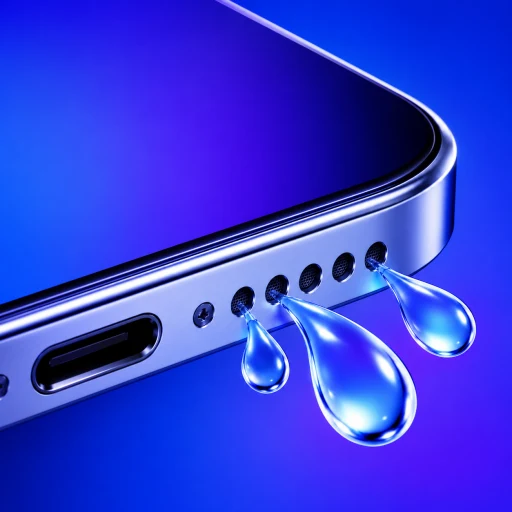
Find the exact source of the crackle
Compare three tests at moderate volume: music through the bottom speaker, a call held to your ear, and speakerphone. If only calls at your ear crackle, the top receiver is the likely source. If music and speakerphone crackle, focus on the bottom loudspeaker.
Disconnect Bluetooth and remove the case. Try more than one recording so a damaged audio file or poor call connection is not mistaken for a speaker fault. Apple notes that network or reception can also affect call quality.
Why can water cause crackling?
Droplets can interfere with the diaphragm and the path sound takes through the grille. Low frequencies create larger movement, so bass may expose the problem more dramatically. As water shifts or evaporates, the symptom may change.
Crackling can also come from residue, a blocked opening, or a damaged speaker. A sound test cannot see which condition exists. Treat an improving symptom differently from one that remains severe or returns repeatedly.
How should you use Water Eject?
Disconnect cables, wipe the exterior, and place the affected opening downward. Use a controlled sequence at a strong but comfortable volume. Do not begin with maximum volume, and stop if the noise becomes scraping, harsh, or mechanically alarming.
After the sequence, wipe away droplets and allow the phone to rest in a dry area with airflow. Do not use repeated tones as a substitute for time. Apple’s wet-speaker guidance explains that speaker performance may remain degraded until water evaporates.
What should you monitor over time?
Track a consistent sample at moderate volume rather than testing constantly. Ask:
- Is speech clearer than it was an hour ago?
- Does crackling happen only at very high volume?
- Is one output normal while the other remains affected?
- Did the symptom improve and then return?
- Was the liquid fresh water, salt water, pool water, or a drink?
- Are charging, display, power, camera, or temperature symptoms also present?
Clear improvement during drying supports waiting. A flat or worsening pattern is a reason to stop repeating sound.
What if the crackling keeps coming back?
Recurring crackling can mean moisture remains, liquid moved within the cavity, or contamination is affecting the opening. Pool and ocean exposure add residue and corrosion risk that a speaker tone cannot solve.
If a sequence helps for only a few minutes, record that pattern and allow a longer drying interval. Do not keep chasing temporary clarity with continuous playback.
When should you consider service?
Apple recommends service when sound problems persist after its basic speaker checks. Review Apple’s distorted-sound troubleshooting, including checking the opening and testing system sounds.
Consider service sooner for no audio, severe mechanical distortion, recurrent crackling after thorough drying, contaminated-liquid exposure, or any broader device fault. Water Eject can move droplets from a working cavity; it cannot distinguish a wet diaphragm from a damaged one.
Questions about speaker crackling after water
Why does bass make the wet speaker crackle more?+
Lower tones create larger diaphragm movement, which can make interference from droplets, residue or a damaged component more obvious. That does not identify which cause is present.
Can a water-eject tone make crackling worse?+
Excessive volume or prolonged arbitrary playback can stress an already distorted speaker. Use one controlled sequence and stop if crackling becomes harsher or mechanical.
How long should I wait before service?+
There is no universal deadline. Track whether sound clearly improves during drying. Persistent severe crackling, recurring symptoms or additional phone problems justify earlier service evaluation.
Is crackling proof of permanent damage?+
No. Water and debris can temporarily distort sound. It is also not proof that the speaker is safe. Time, drying, contamination history and persistent symptoms determine the next step.