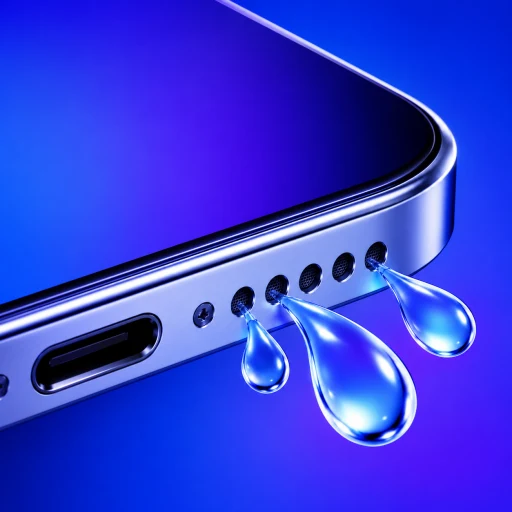
Is the speaker wet, dirty, misrouted, or damaged?
“Speaker cleaner” can describe several different jobs. A phone that became muffled immediately after a splash is not the same as one that gradually lost clarity over months. A silent speaker may be sending audio to Bluetooth rather than suffering a blockage.
Use this quick distinction:
| Pattern | More likely direction |
|---|---|
| Sudden muffling immediately after fresh water | Trapped droplets and drying time |
| Gradual loss of clarity with visible lint or dirt | Blocked grille or receiver |
| Music is clear but calls at your ear are muffled | Top receiver issue |
| Both outputs are silent | Routing, settings, software or service issue |
| Harsh crackling that persists when dry | Blockage or possible speaker damage |
This table narrows the next step; it does not diagnose internal damage.
When should you use a water-eject sequence?
Use water ejection when the speaker still produces sound and the change followed fresh-water exposure. Remove the case and cables, wipe the exterior, face the affected opening downward, and run one controlled sequence at a strong but comfortable volume.
Afterward, wipe away droplets and allow airflow. If the phone itself got wet, follow Apple’s wet-iPhone guidance, including its charging precautions. Do not treat clearer sound as proof that internal areas or the connector are dry.
When should you use physical cleaning?
Wait until the phone is dry. Remove the case, film, or screen protector if it obstructs an opening. Under good light, look across the grille rather than pushing into it. If debris is visible, Apple recommends a small, clean, dry, soft-bristled brush for the speaker or receiver opening.
Use light strokes across the surface. Do not wet the brush, apply cleaning liquid directly to the opening, insert a pin, scrape the mesh, or force material inward. Avoid compressed air. Apple’s speaker troubleshooting page provides the current cleaning and service boundary.
What can a speaker-cleaner app do?
A speaker-cleaner app can produce controlled audio patterns and, on supported hardware, coordinate vibration. That can be useful for moving droplets or agitating loose particles. It also provides a repeatable sequence instead of an arbitrary loud test tone.
It cannot see the grille, know what material is present, measure internal moisture, or prove that a speaker is undamaged. It cannot dissolve sticky residue or pull packed lint through mesh. A credible app should tell you which output it targets and where its job ends.
Why does Water Eject separate water and debris modes?
Water responds to diaphragm movement that encourages droplets toward an opening. Loose debris benefits from a more varied agitation pattern. Water Eject therefore uses a pulsed low-frequency sequence with synchronized vibration for water and a separate Deep Clean pattern with wobbling bursts, chirps, impulse knocks, and rising sweeps.
The separation does not turn sound into a universal cleaning method. It simply avoids pretending one generic tone is equally suited to every problem.
What should you check before assuming damage?
Test more than one audio path. Play music, make a call at your ear, and try speakerphone. Check media and ringtone volume, Silent mode, Focus, Bluetooth, and AirPlay. Remove anything covering the opening.
If the speaker button is dimmed, no sound plays during Apple’s suggested checks, or static and crackling persist, the phone may need service. Stop escalating volume or repeating cleaner sounds when the speaker cannot reproduce them normally.
Questions about cleaning an iPhone speaker
Can a speaker-cleaner sound remove dust?+
Sound and vibration may agitate loose particles, but they cannot reliably remove embedded grime or material packed into a grille. Visible blockage may need careful dry brushing or service.
Can I use compressed air?+
Apple advises against compressed air when cleaning an iPhone. It can drive material or moisture further into openings and is difficult to control around small components.
Is a toothbrush safe for the speaker grille?+
Apple recommends a small, clean, dry, soft-bristled brush when cleaning is necessary. Avoid wet, stiff, dirty or abrasive brushes and do not force bristles into the opening.
Why is only one iPhone speaker quiet?+
The top receiver and bottom loudspeaker serve different audio paths. Compare a normal call, music and speakerphone to identify the affected output before cleaning or playing a tone.