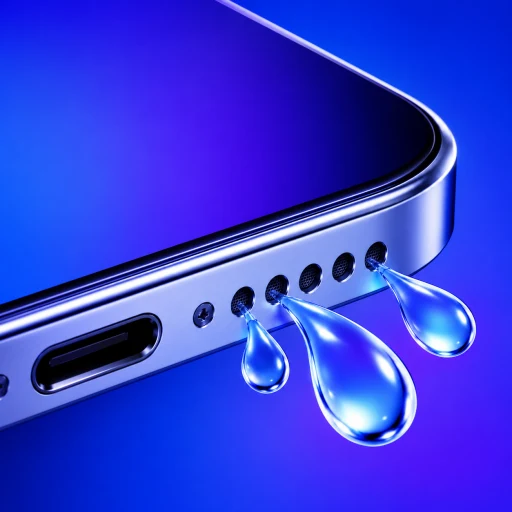
Confirm that the phone speaker is the affected output
Start with familiar audio and disconnect Bluetooth speakers, headphones, cars, and casting targets. Raise the media volume and remove a case that covers an opening. Compare music, a normal call, and speakerphone if the device supports them.
The test helps separate three issues:
- media is being routed somewhere else;
- one speaker or receiver is affected;
- the phone has a broader audio or hardware problem.
If no built-in speaker can produce sound, a water-removal tone has nothing useful to drive. Troubleshoot routing and system audio before repeating playback.
Prepare the phone without pushing water inward
Disconnect cables and accessories. Wipe the exterior with a soft, lint-free cloth. Remove the case and point the affected opening downward. Do not poke tissue, swabs, pins, or brushes into a wet grille. Avoid forceful shaking that can move liquid toward other openings.
The manufacturer’s device-care instructions take priority because phone designs and water-resistance claims differ. For iPhone, Apple recommends speaker-side-down positioning on a lint-free cloth, airflow, and no charging until the device is dry.
Run one controlled water-removal sequence
Use a purpose-built low-frequency sequence rather than a random extreme tone. Set a strong but comfortable volume and let the sequence finish. Watch for droplets at the opening, wipe the exterior, and listen for a meaningful change in clarity.
Do not judge success only by visible spray. A small amount of water may move without producing a dramatic effect. Conversely, a loud tone does not prove that deeper moisture or another component is safe.
Allow airflow and drying time
After playback, leave the phone in a dry area with airflow. Keep the affected opening facing down when practical. Avoid heat, compressed air, rice, and objects inserted into a connector.
If an iPhone shows a liquid-detection alert, Apple says to disconnect the cable, tap the phone gently with the connector facing down, and leave it in a dry area with airflow. Apple’s liquid-alert instructions explain when to test the connector again and what not to do.
Treat contaminated liquids differently
Pool water, ocean water, milk, coffee, soda, soap, and dirty street water can leave dissolved material or debris behind. A tone may move liquid but cannot remove residue or reverse corrosion. Even if audio improves, the incident may need additional manufacturer guidance or service.
Do not keep increasing the volume to attack residue. That changes the stress on the speaker without solving the chemical or physical contamination.
Decide whether to retry, clean, or seek service
One additional controlled sequence may be useful when the speaker works, droplets moved, and the sound is improving. If the phone is dry and the grille is visibly blocked, follow the manufacturer’s safe cleaning method instead.
Seek service when the speaker remains silent, severe distortion persists, the device becomes hot, charging fails, the display or cameras change, the phone restarts, or liquid alerts continue after drying. Those symptoms extend beyond the narrow problem a speaker sound can address.
Questions about water in a phone speaker
Why does a wet phone speaker sound muffled?+
Water around the diaphragm or grille can interfere with movement and block the path sound takes out of the phone. Performance may improve as droplets move and remaining moisture evaporates.
Does the speaker need to face downward?+
Downward positioning gives expelled water a path away from the opening. Place the phone over a lint-free cloth and wipe the exterior rather than shaking it aggressively.
Is water in the charging port the same problem?+
No. A speaker sound acts on a working speaker cavity. A wet USB-C or Lightning connector needs drying time and the device manufacturer’s charging guidance.
When should I stop using water-removal sounds?+
Stop if the speaker produces no sound, distortion becomes severe, the liquid was contaminated, the phone has other faults, or controlled playback and drying do not improve the symptom.