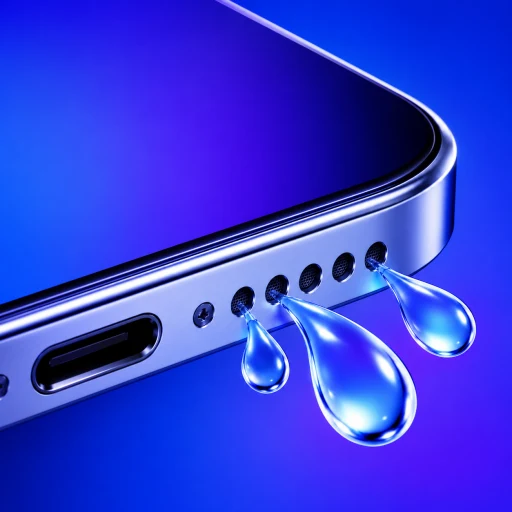
Begin with the exposure severity
A brief fresh-water splash differs from prolonged submersion, sea water, pool water or a sticky drink. Note the liquid, duration, approximate depth and whether the phone had prior damage or repair. Greater exposure and contamination lower the threshold for professional assessment.
Water resistance is not permanent, and a rating does not predict the condition of an individual phone’s seals.
Identify the affected output
Disconnect Bluetooth and test the bottom loudspeaker with a familiar spoken clip at moderate volume. Test the top receiver with a short call at your ear. Remove any case or protector overlapping an opening.
One muffled but functioning path can fit local moisture. Both paths failing, or audio playing normally after a route correction, points away from a simple wet cavity.
Look for a recovery trend
Moisture commonly changes with position, airflow and time. Sputtering may lessen and speech may become clearer between spaced checks. Damage or dried residue is more likely when a harsh rattle stays identical, the output remains silent or distortion returns after appearing resolved.
Use the same clip and level. A trend is meaningful only when the comparison is controlled.
Use Water Eject as a limited test
When the output works but sounds wet, point it downward and run one complete controlled sequence. Wipe away droplets and retest ordinary audio. Clear improvement supports free liquid near the acoustic path.
No change does not prove permanent damage, but it is a reason to stop repeating tones. Sound cannot remove salt, sugar, packed debris or a torn component.
Check for evidence beyond audio
Repeated liquid alerts, unreliable charging, heat, unexpected shutdowns, display changes and camera fogging suggest a broader incident. Follow Apple’s wet-iPhone guidance and avoid charging a wet connector.
Once dry, inspect the grille in bright light. Do not scrape or insert anything. Visible damage or residue behind the mesh belongs in professional care.
Accept the limit of home diagnosis
No sound clip, app or waiting period can prove that damage is permanent. A technician may need to inspect the acoustic component, connector and evidence of contamination. Apple’s speaker troubleshooting recommends service when no sound, static or crackling persists after basic checks.
Document the symptom trend and actions already taken. Improvement supports patience; a flat, recurring or worsening pattern supports inspection without claiming certainty either way.
Questions about a wet iPhone speaker versus permanent damage
Does crackling prove the speaker is damaged?+
No. Droplets, residue, blocked mesh and mechanical faults can all crackle; time and trend are needed to interpret it.
Is immediate improvement a good sign?+
Yes, it supports temporary moisture, but it does not certify the phone or connector as fully dry.
How long should I wait before service?+
Use improvement rather than a universal deadline; unchanged, worsening or multi-system symptoms justify earlier assessment.
Can Water Eject test for permanent damage?+
No. It can show whether a speaker produces sound and whether droplets appear to move, not why a persistent fault remains.