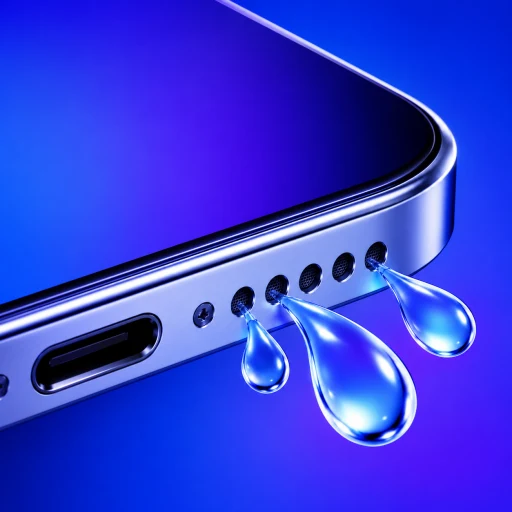
Which no-shortcut options exist?
You can use a purpose-built app, a direct web sound or a locally stored audio file. All three avoid importing an automation into Shortcuts. Their differences are guidance, output control, repeatability and dependence on a browser or remote file.
The best option is one you can understand and operate without approving unrelated access under pressure.
How do you use a direct sound?
Remove the case and cables, disconnect Bluetooth and confirm ordinary audio plays through the iPhone. Identify the bottom loudspeaker or top receiver, point that opening downward and start one controlled low-frequency sequence.
Use a strong but comfortable media volume. Wipe away droplets and leave the phone in a dry area with airflow. Do not loop the sound continuously.
What does an app add?
A focused app can generate sound locally, label the output target, combine tones with vibration, provide a defined duration and show the safety boundary. That reduces reliance on an unknown web page or remote audio asset.
Water Eject also distinguishes its automatic water sequence from its separate debris-cleaning pattern. That avoids using one generic tone for every speaker complaint.
What do you lose without a shortcut?
You may lose a one-phrase Siri trigger and a customizable action chain. Those conveniences matter only if the shortcut is already installed, inspected and working. They do not improve the physical effect of a tone routed to the correct speaker.
If voice control matters, Siri can open an app, but app-specific actions depend on what the app exposes.
What should you check before pressing play?
Make sure the phone is not connected to a charger, the intended output is selected and the exposure was not salt water or a sticky drink. If the speaker is silent, a sound tool cannot drive it. If the phone has broader liquid symptoms, device care takes priority.
Apple’s wet-iPhone guidance covers airflow, charging precautions and speaker-side-down positioning.
When should you stop?
Stop after one or two controlled attempts if nothing improves. Also stop for severe mechanical distortion, no sound, contaminated-liquid exposure, heat, charging failure, display changes or repeated liquid alerts.
Avoiding Shortcuts simplifies software. It does not remove the physical limits of speaker water ejection.
Pick the simplest repeatable route
For a one-time event, a trusted browser sound may be enough if it loads without ads or unexpected redirects and plays through the intended iPhone speaker. For recurring access, an installed app gives a stable launch point and clearer output controls. Save neither option as a substitute for Apple’s wet-device steps. Before playback, disconnect Bluetooth, remove headphones, uncover the grille and point the affected opening downward. Afterward, close the sound source and compare ordinary audio. The result—not the delivery method—should determine whether you dry longer, inspect for debris or seek service.
Questions about ejecting water without a shortcut
Can I use a website instead of a shortcut?+
Yes, if the sound is trustworthy and reaches the affected output. Web playback may offer less output control and guidance than a purpose-built app.
Can Siri run water ejection without a shortcut?+
Siri can open an installed app, but the phrase alone does not activate a hidden iPhone water-eject feature.
Is an app required?+
No. The physical requirement is controlled sound through the correct working speaker. An app mainly improves guidance, repeatability and output control.
Does avoiding a shortcut make water removal safer?+
It removes shortcut-action and permission concerns, but volume, routing, contamination and device-care limits still apply.