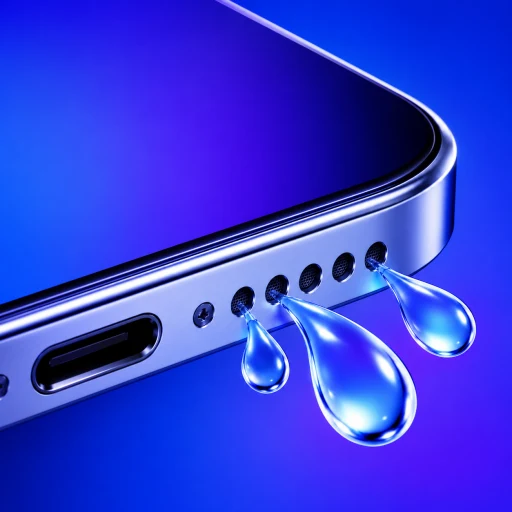
How does a water-eject sound work?
A phone speaker creates sound by moving a small diaphragm backward and forward. A controlled low-frequency signal produces larger, slower movement than speech or a notification sound. When droplets sit near the diaphragm or grille, that movement can help drive them outward.
The sound is acting on the audio cavity, not the whole phone. It does not pull moisture from behind seals, dry a charging connector, or reverse corrosion. Think of it as one step for a working but wet speaker, followed by exterior drying and time.
How do you use the sound correctly?
Prepare the phone before pressing play:
- Remove the case, screen accessory, or film if it covers an opening.
- Disconnect cables, headphones, Bluetooth speakers, and unintended AirPlay targets.
- Confirm which output is affected: the bottom loudspeaker or the top receiver used for calls.
- Wipe the exterior with a soft, lint-free cloth.
- Place the affected opening downward so gravity can help droplets move away.
- Use a strong but comfortable media volume and run one complete sequence.
- Wipe away visible droplets, then leave the phone in a dry area with airflow.
Apple’s current guidance says to place a wet iPhone speaker-side down on a lint-free cloth and notes that speaker performance may remain degraded until water evaporates. See Apple’s wet-iPhone guidance for the broader device-care steps.
Why use a sequence instead of one endless tone?
A continuous note holds the diaphragm in a repetitive motion. A purpose-built sequence can pulse the movement, pause to let droplets settle, sweep nearby frequencies, and coordinate vibration. The goal is controlled movement, not maximum loudness or the longest possible session.
Water Eject’s automatic mode centers on pulsed 165 Hz output, resonance sweeps, and synchronized haptics over roughly one minute. Manual mode exists for deliberate output and frequency control. Neither mode should be presented as a guaranteed repair.
Which speaker should you target?
The bottom loudspeaker handles most media playback. The top receiver sits near your ear during calls. If music sounds normal but callers sound muffled, the upper receiver is the more likely target. If speakerphone and music sound muffled, focus on the bottom output first.
A generic web video or shortcut may play through the standard media route only. That can explain why the bottom speaker improves while the earpiece remains wet. Water Eject supports explicit speaker and earpiece selection so you can match the output to the symptom.
When should you repeat the sequence?
Wait long enough to judge the result. If droplets appeared and the sound improved, wipe the phone and allow airflow before deciding whether another run is useful. One additional controlled run is reasonable when the speaker still works and the symptom is clearly changing.
Stop repeating tones when:
- the speaker produces no sound;
- crackling becomes severe or mechanical;
- there was salt water, soap, milk, coffee, or another contaminant;
- the phone also shows charging, display, heat, power, or connectivity problems;
- nothing changes after a complete run and drying time.
What should you do after the sound finishes?
Keep cables disconnected while the phone is wet. Leave it in a dry place with airflow and avoid external heat, compressed air, objects inserted into the connector, and rice. Apple’s liquid-detection guidance explains these precautions and notes that a connector may take up to a day to dry fully.
If the opening looks dirty after it is dry, do not assume another tone will remove embedded debris. Apple advises checking for blockage and, when needed, using a clean, dry, soft-bristled brush on the speaker or receiver opening. Persistent distortion may require service.
Questions about water-eject sounds
What frequency removes water from an iPhone speaker?+
There is no universal frequency that guarantees removal. Low-frequency movement is commonly used because it creates visible speaker excursion. Water Eject’s automatic sequence centers on pulsed 165 Hz sound and varies the pattern rather than relying on one continuous note.
How loud should the water-eject sound be?+
Use a strong but comfortable media volume that produces clear output without harsh distortion. Stop if the speaker sounds mechanically distressed or if the phone becomes unusually warm.
How many times can I run the sound?+
Run one complete sequence, wipe away moisture and reassess. A second run may help if droplets are still moving, but repeated playback cannot replace drying time or repair a damaged speaker.
Can a water-eject sound damage the speaker?+
Avoid excessive volume, long continuous playback and arbitrary test tones. Use a controlled sequence and stop if you hear severe distortion, scraping, or worsening crackle.