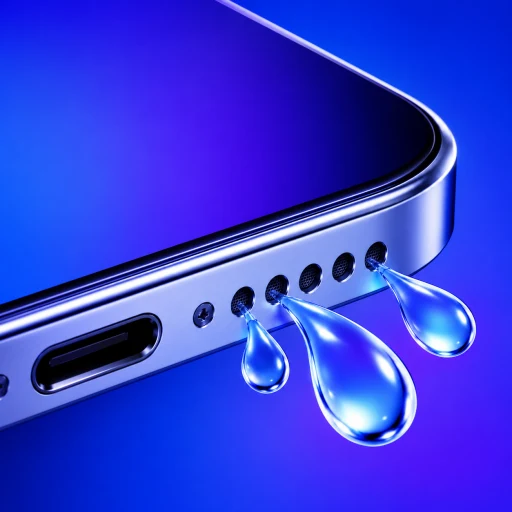
First determine who sounds muffled
If you hear the other person poorly, the top receiver or incoming call path may be involved. If the other person hears you poorly, one of the iPhone microphones may be obstructed instead. Ask a second contact or play voicemail to avoid diagnosing a single weak network call as water damage.
Water Eject drives speakers, not microphones. Keep that distinction at the center of the test.
Compare receiver and speakerphone
Disconnect Bluetooth and remove a case or screen protector that overlaps the top slot. Make a short call in a quiet room at moderate volume, then switch to speakerphone. Clear speakerphone audio with a muffled call at your ear isolates the top receiver.
If both paths sound poor only during calls, test ordinary media. A network, app or call-quality issue may be more likely than one wet speaker.
Follow the wet-device precautions
Disconnect cables, wipe the exterior and let the phone sit in a dry area with airflow. Hold the top edge downward to encourage liquid away from the receiver. Avoid heat, compressed air, rice, swabs and sharp objects.
Apple’s liquid-detection guidance warns against forced drying and objects in openings. Do not charge a wet connector because the audio path seems usable.
Run a receiver-targeted sequence only when sound works
Choose an earpiece or receiver target rather than assuming ordinary media reaches the correct output. Start below maximum volume, keep the top edge downward and run one controlled Water Eject sequence. Stop if the receiver is silent or produces a harsh mechanical rattle.
Wipe away droplets from the exterior and return the iPhone to airflow. Avoid placing the wet opening directly against your ear immediately after playback.
Recheck with the same call conditions
After drying time, repeat a brief call in the same quiet room at the same volume. Immediate and stable improvement supports temporary moisture. If the symptom returns, residue or a blocked mesh becomes more plausible. Inspect only when dry and never insert a tool into the receiver slot.
A recording of your own voice tests microphones, not the receiver, so do not use it as the only comparison.
Escalate beyond a wet-speaker explanation
Seek service for persistent muffling, repeated crackling, no receiver sound, damaged mesh or symptoms that do not trend better. Heat, charging trouble, shutdowns, display changes and camera fogging require broader wet-device attention.
Describe which call direction failed and whether speakerphone remained clear. That evidence makes the service request far more precise.
Questions about iPhone calls that sound muffled after water
Why does music sound normal while calls are muffled?+
Music usually emphasizes the bottom loudspeaker, while calls at the ear use the top receiver, so one opening can be affected independently.
Could the other caller’s microphone be the problem?+
Yes. Test more than one call and compare speakerphone, recordings and another contact before isolating your receiver.
Should I use maximum call volume?+
No. Start at moderate volume and compare consistently; maximum volume can make distortion harder to interpret.
When should I seek service?+
Seek service if calls remain muffled after drying, crackling returns, the receiver is silent or other device symptoms appear.