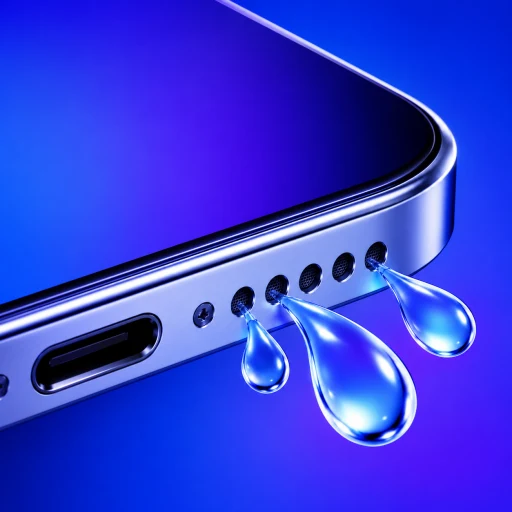
Stop the cycle safely
Pause the machine according to its controls and retrieve the iPhone only when it is safe to open. Disconnect the machine from power only if its instructions require it; never reach around active electrical equipment or moving parts.
Once retrieved, remove the case and disconnect any cable. Wipe the exterior with a soft, lint-free cloth and hold the connector down so excess liquid can drain away.
Account for more than water
A wash cycle can expose the phone to detergent, fabric products, warm water, prolonged agitation and repeated impact against the drum. These factors are outside simple water-resistance assumptions. Note the cycle temperature, duration and products used, because those details help a technician assess contamination and mechanical risk.
Do not treat a phone that powers on as proof that it escaped damage. Some residue and corrosion effects develop later.
Avoid repeated operation and aggressive drying
Do not press every button, make long test calls or loop music. Stop using the phone if it becomes hot, restarts, flickers, smells unusual or develops camera fogging. Do not use heat, compressed air, a vacuum, swabs or rice.
Apple’s wet-iPhone guidance favors a dry area with airflow and warns against inserting objects into openings. Keep the connector and affected audio opening oriented downward.
Use Water Eject only for a narrow symptom
If the phone remains stable and ordinary audio plays through one muffled output, disconnect Bluetooth and run one controlled sequence with that opening downward. Stop if the sound is silent, severely distorted or mechanically rattling.
The tone may move free droplets near a working speaker diaphragm. It cannot remove detergent, correct impact damage or tell you whether other internal spaces are wet. A temporary audio improvement should not change the broader caution.
Delay charging and protect your data
Do not connect a cable while the port is wet or a liquid alert appears. Apple’s guidance gives at least five hours before wired charging after ordinary liquid exposure, but a washing-machine event can justify waiting for professional advice. Never use emergency override simply to see whether charging works.
If the phone is cool, stable and usable, consider a wireless backup process that does not require connecting a wet port. Do not prioritize backup over a device showing unsafe symptoms.
Arrange evaluation for persistent or multi-system symptoms
Professional assessment is sensible after a full or detergent-heavy cycle even when sound improves. Seek help promptly for charging trouble, heat, shutdowns, display changes, camera fogging, damaged buttons, no audio or severe crackling.
Describe the full incident rather than only saying the speaker is wet. The combination of liquid, chemicals and impact is what makes a washing-machine scenario unusually demanding.
Questions about an iPhone that went through a washing machine
Is a short wash cycle still serious?+
Yes. Detergent, agitation and repeated impact make this more complex than a brief fresh-water splash.
Should I keep testing the phone?+
No. Disconnect it and minimize use, especially if there is heat, instability, display trouble or any unusual smell.
Can Water Eject remove detergent?+
No. Sound may move free liquid from a functioning speaker but cannot clean dissolved or dried residue.
When can I charge it?+
Only after the connector is dry and the applicable waiting period has passed; persistent alerts or uncertainty warrant service.