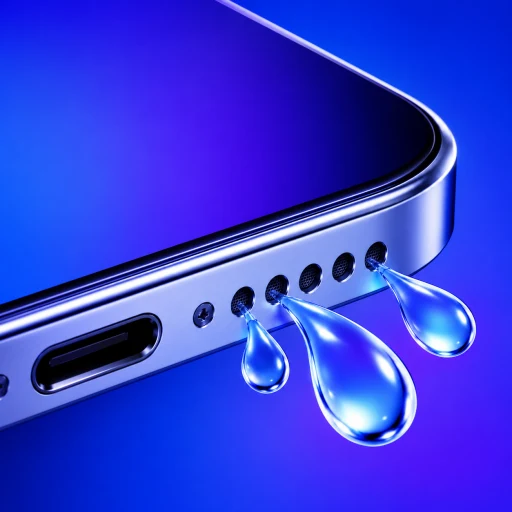
Identify the swimming environment
Pool water may contain chlorine and treatment chemicals; sea water leaves salt; lake water can carry sediment and biological material. Even a freshwater swim usually means longer exposure and greater pressure than a brief splash. Record where the phone was and for how long.
Do not reduce the incident to “water in the speaker.” The liquid type predicts what may remain after evaporation.
Complete the device-level response
Disconnect cables, remove the case and wipe the exterior with a soft, lint-free cloth. Hold the connector and affected opening downward, then leave the phone in a dry place with airflow. Avoid heat, compressed air, rice, swabs and sharp tools.
Apple’s wet-iPhone guidance should govern the overall response and charging timeline. Audio improvement does not establish connector dryness.
Test each output separately
Disconnect Bluetooth and use a short reference clip at moderate volume for the bottom loudspeaker. Make a brief call at the ear for the top receiver. Identify whether crackling affects one physical output, both outputs or only a particular app.
If the correct output is silent, do not force it with a maximum-volume tone. Persistent no sound belongs on a service path.
Use one controlled water-eject sequence
When the affected output functions but sounds wet, point it downward and run one complete Water Eject sequence. Wipe away any expelled droplets and return the phone to airflow. Compare the same reference clip afterward.
Clear improvement supports remaining free liquid. No change is a stopping rule: acoustic movement cannot clean chlorine, salt or sediment attached to the mesh.
Reassess after drying
Inspect the dry opening under bright light without inserting anything. Persistent consistent muffling can reflect blockage; harsh or returning crackling can point to residue or component damage. Do not scrape or add cleaning fluid.
Apple’s speaker troubleshooting permits a small, clean, dry soft-bristled brush for loose surface debris only.
Escalate contaminated or persistent symptoms
Seek service sooner after sea water, chemical-heavy pool water or dirty lake exposure. Also escalate for unchanged crackling, recurrence after improvement, repeated liquid alerts, charging failure, heat, restarts, display changes or camera fogging.
Tell the technician which water source was involved. That fact explains why a tone that can move droplets may still leave the underlying problem unresolved.
Until the diagnosis is clear, keep playback brief and moderate. Loud repeated testing can disguise small improvements and adds no cleaning action against dissolved contaminants.
Questions about iPhone speaker crackling after swimming
Is pool water different from fresh water?+
Yes. Chlorine and other dissolved substances can remain as residue after water evaporates.
Is ocean exposure more urgent?+
Salt residue is particularly concerning and should lower the threshold for model-specific guidance or professional assessment.
Can I keep playing tones until crackling stops?+
No. Run a controlled sequence only when it produces improvement; unchanged repetition cannot remove contaminants or repair damage.
What symptoms need service?+
Seek help for persistent or returning crackling, no sound, charging trouble, heat, shutdowns, display changes or camera fogging.