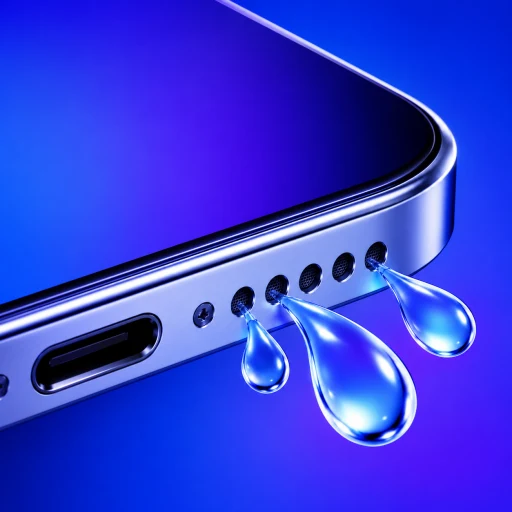
Treat normal operation as encouraging, not conclusive
A phone that starts, responds and plays sound has avoided obvious immediate failure. That does not show that the connector, cameras, buttons and internal spaces are dry. Submersion can place liquid around more openings than a surface splash, and symptoms may appear after evaporation leaves residue.
Note the liquid type, approximate depth and duration. Fresh water differs from sea, pool, bath or dirty water, and those details matter if problems emerge.
Complete the wet-device response
Disconnect every cable, remove the case and wipe the exterior with a soft, lint-free cloth. Hold the connector downward and gently tap the phone against your hand. Place it in a dry location with ordinary airflow.
Do not use a hair dryer, heater, compressed air, rice or objects in the connector. Apple’s liquid-detection guidance warns against these methods and recommends allowing the device to dry naturally.
Keep tests short and purposeful
Check for heat, display changes, unexpected restarts or camera fogging. Disconnect Bluetooth, play a short spoken clip through the bottom speaker and make a brief call at the ear. Stop once you know whether each output works.
Long gaming sessions, benchmark apps and continuous music do not prove safety. They create heat and make it harder to leave the phone in a stable drying position.
Use a speaker tone only for audible moisture
If one built-in output works but sounds muffled, point that opening downward and run one controlled Water Eject sequence. Wipe away visible droplets and return the phone to airflow. Stop for silence, harsh rattling or worsening distortion.
If both outputs sound normal, there is nothing for a speaker tone to diagnose. Running it “just in case” cannot reach other internal spaces or certify them as dry.
Delay wired charging
Clear audio and a working display do not override connector precautions. Apple’s wet-iPhone guidance says to allow at least five hours before wired charging after exposure. If a liquid alert appears, disconnect and give the connector more time.
Avoid emergency override unless an actual emergency outweighs the risk. Ensure the exterior is dry before placing the device on a wireless charger.
Watch the trend over the next day
Stable, normal behavior after drying is reassuring. Seek service for repeated alerts, unreliable charging, recurring muffling, crackling, no sound, heat, shutdowns, display problems or camera fogging. Contaminated or prolonged submersion lowers the threshold for assessment.
The key is not to panic, but not to let a working screen erase the facts of the exposure either.
Questions about a submerged iPhone that still works
Is the phone safe because it turns on?+
Not necessarily. Normal operation is encouraging, but moisture or residue can remain and later symptoms are possible.
Should I run a full diagnostic immediately?+
Keep testing brief. Repeated operation adds little evidence and can distract from drying and connector precautions.
Can I charge after the speaker clears?+
No. Speaker recovery does not establish connector dryness; follow the waiting period and any liquid alert.
What delayed symptoms matter?+
Watch for recurring distortion, liquid alerts, charging trouble, heat, restarts, display changes and camera fogging.