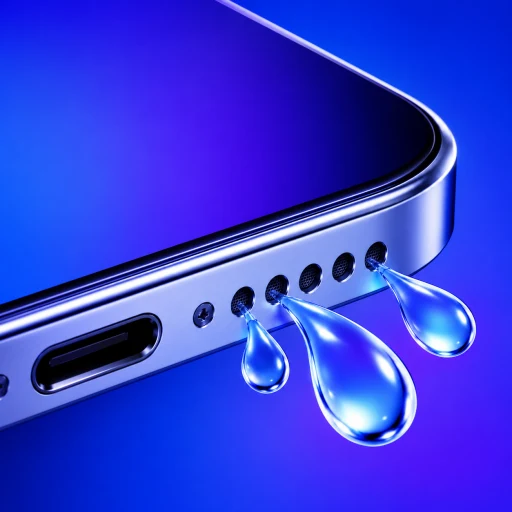
Disconnect and uncover the phone
Unplug cables and accessories and remove the case. Wipe the exterior with a soft, lint-free cloth. Do not press liquid toward openings while handling the phone.
If the exposure was prolonged, contaminated or followed by abnormal heat, shutdowns or display changes, stop normal use and seek appropriate device-care advice.
Remove excess liquid gently
Hold the iPhone with the USB-C or Lightning connector facing down and tap it gently against your hand. Place a wet speaker downward over a lint-free cloth to see whether droplets collect.
Do not shake aggressively. The goal is to give liquid a downward path, not move it unpredictably through the device.
Use dry airflow
Leave the iPhone in a dry area with airflow. Apple says a fan blowing cool air toward the connector may help. Keep the phone away from direct heat and humid rooms.
Drying time depends on exposure and the affected area. Recheck only at sensible intervals.
Avoid common harmful methods
Do not use a hair dryer, heater, oven or compressed air. Do not insert tissue, swabs or other objects into the connector. Do not place the phone in rice.
Apple’s liquid-detection guidance specifically warns against these methods.
Treat speaker water separately
If the phone works and only the speaker or receiver is muffled, one controlled water-eject sequence can help move accessible droplets. Identify the output, point it downward and stop after a useful test.
Clearer sound does not establish that the connector or interior is dry.
Decide when charging can resume
Apple’s general guidance says to allow at least five hours before wired charging after liquid exposure. A connector alert may require another test after 30 minutes and continued drying for up to a day.
Follow the device’s alert and do not override it for convenience. Wireless charging still requires a dry exterior.
Check progress without interrupting drying
Frequent handling can move liquid into another opening and makes it harder to judge whether symptoms are improving. Leave the iPhone in one stable, ventilated position and check at sensible intervals. At each check, look for new camera fogging, heat, display changes, unexpected restarts or a returning connector alert. Test audio briefly rather than looping media. A steadily improving muffled speaker supports continued drying; a symptom that is unchanged, worsening or spreading to another system is a reason to stop home troubleshooting and seek service.
Questions about drying an iPhone safely
Can I use a fan?+
Apple says cool airflow directed toward the connector may help. Do not use heated air.
How long should the iPhone dry?+
There is no single timer for the whole phone. Apple advises at least five hours before general wired charging and up to 24 hours for a persistent connector alert.
Should I turn the phone on to test it?+
Avoid repeated testing after serious exposure. Disconnect power and seek advice when the phone is hot, unstable or shows multiple faults.
Can Water Eject dry the phone faster?+
It may move droplets from a working speaker cavity but cannot dry the connector, battery, cameras, display or internal electronics.