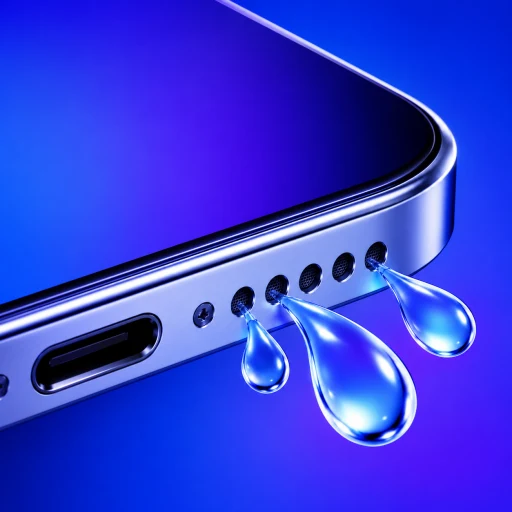
Why is rice such a common recommendation?
Rice is familiar, dry and associated with absorbing moisture, so it became a popular household response. The idea feels passive and safe compared with heat.
That intuition is not the same as device guidance. A phone has narrow ports, mesh, adhesives and internal paths that a bowl of rice does not control.
What does Apple say?
Apple’s liquid-detection guidance explicitly says not to put an iPhone in a bag of rice because small particles can damage the device.
Those particles can reach the connector or other openings. Rice also makes it harder to observe alerts and maintain deliberate airflow.
What should you do instead?
Disconnect cables, remove the case and wipe the exterior with a soft, lint-free cloth. Hold the connector downward and tap the phone gently against your hand.
Leave the iPhone in a dry area with airflow. Apple says cool fan airflow directed toward the connector may help.
What other methods should you avoid?
Do not use a hair dryer, heater, oven, compressed air, tissue, swabs or foreign objects in the connector. Heat and force can create new damage rather than speed safe drying.
Do not charge simply because the outside feels dry.
Where does Water Eject fit?
If the phone works and the only remaining symptom is a muffled speaker or receiver, point that opening downward and run one controlled sequence. Then return the phone to airflow.
The app acts through the speaker diaphragm. It cannot pull water from the connector or interior and should not be used to justify early charging.
How do you know drying is complete?
There is no single household test. Follow Apple’s minimum intervals and the liquid alert. Stable device behavior and a dry connector matter more than time spent in a container.
Seek service for persistent alerts, charging failure, heat, shutdowns, display changes or severe audio problems.
Why a sealed container is the wrong goal
Drying needs a path for moisture to leave. Burying a phone in rice reduces useful airflow and adds dust or particles near openings, while giving no reliable signal that the connector or internal spaces are dry. The visible grains can also create false confidence because the phone looks “treated” even when symptoms remain. A stable location with ordinary dry airflow is easier to monitor and aligns with Apple’s guidance. Keep the connector and affected speaker oriented so gravity can help, and let time—not a household absorbent—do the work.
Questions about rice and wet iPhones
Does rice absorb water from inside an iPhone?+
It does not provide a verified, controlled path for drying internal components, and particles can enter openings.
What should I use instead?+
Use a dry area with airflow. Apple says cool fan airflow toward the connector may help.
Can silica gel replace rice?+
Apple’s published instructions focus on airflow rather than sealing the phone in a container. Follow the manufacturer’s method.
Can I run Water Eject while the phone is in rice?+
No. Remove the phone, keep openings clear and use the app only for a functioning speaker after safe handling.